If you’ve ever opened a cannabis menu, scrolled past flower and edibles, and suddenly found yourself looking at products called live resin, rosin, badder, shatter, wax, or hash, you may have had the same thought a lot of beginners do:
What exactly am I looking at?
Cannabis concentrates can be one of the more confusing product categories because there are so many names, textures, extraction methods, and formulations packed into one section of the menu.
The basic idea, however, isn’t nearly as complicated as the terminology makes it sound.
For this edition of Local’d Cannabis 101, we’re breaking down what cannabis concentrates are, some of the common types you may encounter, how they’re different from flower, and what beginners should know before choosing one.
What Is a Cannabis Concentrate?
A cannabis concentrate is exactly what the name suggests: a product in which certain compounds from the cannabis plant have been concentrated.
Depending on the product and how it was made, that can include cannabinoids such as THC and CBD, along with terpenes and other compounds naturally found in cannabis.
Removing much of the plant material allows the remaining product to contain a higher concentration of cannabinoids than traditional cannabis flower.
That’s one of the most important things for beginners to understand.
Concentrates can contain considerably more THC than flower.
So while the products themselves may look small, their size isn’t a good indication of their potency.
Why Are There So Many Different Types?
This is where cannabis terminology starts getting interesting.
Words like resin, rosin, wax, badder, and shatter aren’t simply different names for exactly the same product. They can describe differences in how a concentrate was produced, its consistency, how the cannabis material was handled before extraction, or some combination of those things.
Two concentrates can therefore look completely different while still belonging to the same broader product category.
Let’s go through some of the names you’re most likely to encounter.
What Is Cannabis Resin?
“Resin” can be a slightly confusing term because it may be used in different contexts, but cannabis resin concentrates are generally produced using extraction processes that separate desirable compounds from cannabis plant material.
One type you’ll commonly see is live resin.
Live resin is generally made from cannabis that is frozen shortly after harvest rather than being dried and cured first. The goal is to preserve more of the plant’s original aromatic compounds during processing.
Because terpenes contribute significantly to cannabis aroma and flavor, terpene preservation is a major part of why live resin has become such a recognizable concentrate category.
If you want a deeper explanation of what those compounds are, our Cannabis Terpenes Explained guide covers them in much more detail.
What Is Live Rosin?
Live rosin and live resin sound almost identical, which is unfortunate for anyone trying to learn cannabis terminology for the first time.
But there’s an important distinction.
Rosin is produced using a solventless process, typically relying on heat and pressure rather than chemical solvents to separate cannabis oils from plant material or hash.
Live rosin generally begins with fresh-frozen cannabis that is processed into hash before being pressed.
Because of the additional processing involved and the emphasis on preserving the plant’s characteristics, live rosin is often positioned as a premium concentrate.
So if you remember only one thing: Resin and rosin are not interchangeable terms. One letter actually matters quite a bit here.
What Is Wax?
Wax is a general term commonly used for concentrates with a softer, wax-like consistency.
Rather than forming a hard, glassy sheet, the concentrate may be thicker and easier to manipulate.
You’ll sometimes see “wax” used fairly broadly, which is another reason looking at the actual product description and label is more useful than relying entirely on the name.
What Is Budder or Badder?
Budder and badder are concentrates named largely for their texture.
As the names suggest, these products tend to have a softer, whipped, creamy, or batter-like consistency.
The spelling and terminology can vary between producers, and you shouldn’t assume that two products labeled “badder” were made using exactly the same extraction process.
Think of the term primarily as a clue about consistency, then look at the product information to understand what’s actually inside.
And yes, the cannabis industry apparently decided that learning concentrates should also make you hungry.
What Is Shatter?
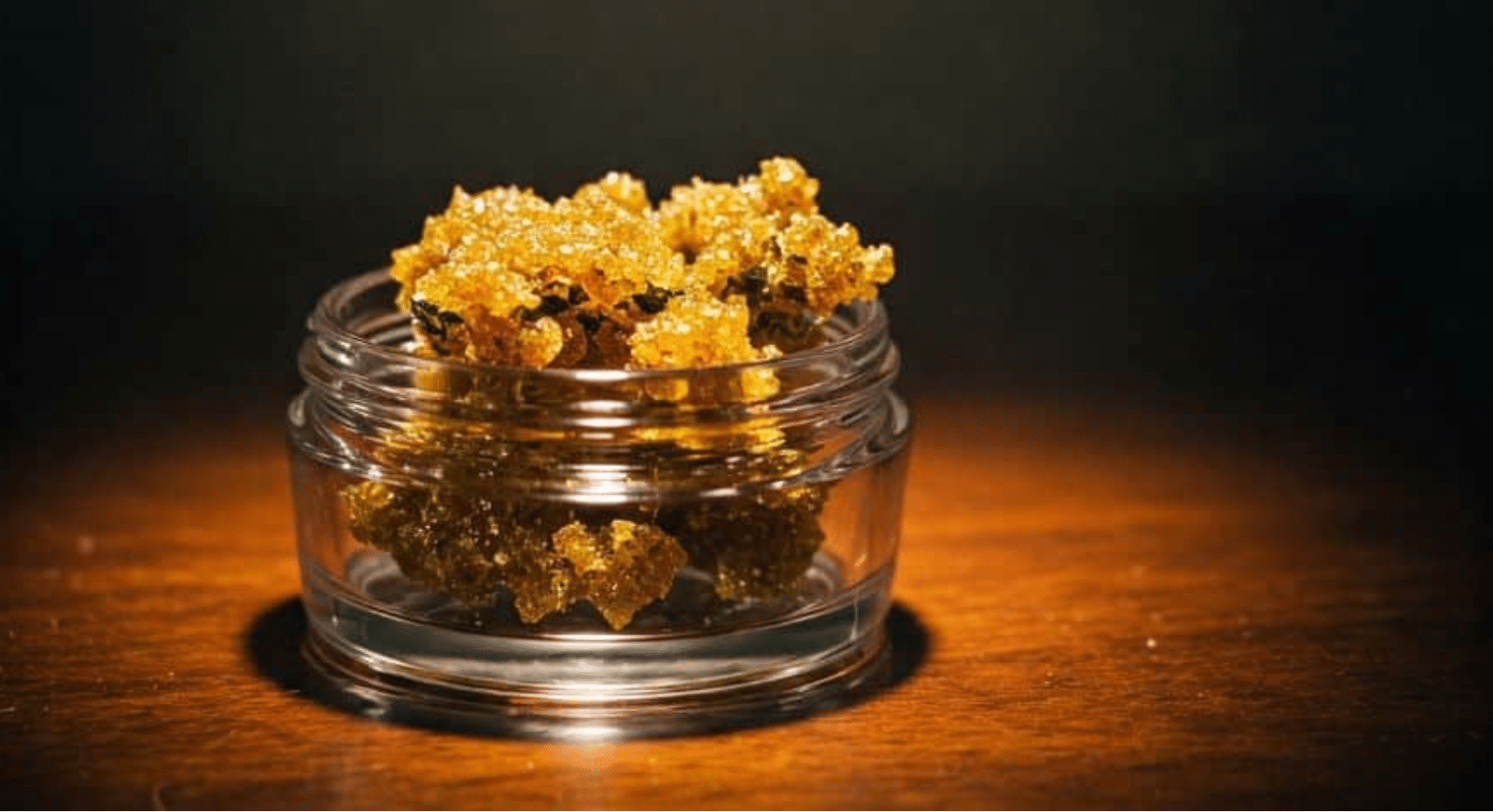
Shatter is generally a firmer concentrate with a brittle or glass-like appearance.
It gets its name from the tendency of thin pieces to snap or break apart.
Shatter became one of the more recognizable concentrate formats because its appearance is noticeably different from softer waxes and badders.
But once again, texture doesn’t tell you everything about potency or composition.
The label does.
What Is Hash?
Hash has a much longer history than many of the modern concentrate names you’ll see on today’s menus.
At its core, hash is made by collecting and compressing the resin-rich trichomes from cannabis.
Those trichomes are the tiny structures on the cannabis plant that contain many of its cannabinoids and terpenes.
Modern hash products can come in several forms and may be produced using different methods, so “hash” itself represents a broader category rather than one single standardized product.
What Is Bubble Hash?
Bubble hash is a solventless concentrate generally produced using ice water and agitation to separate trichomes from cannabis plant material.
The collected material is then filtered and dried.
You may also see terms such as ice water hash used for products produced through similar methods.
Because no chemical extraction solvent is used in the process, bubble hash falls within the broader family of solventless concentrates.
What Does “Solventless” Mean?
This is another term that appears frequently on concentrate menus.
A solventless concentrate is produced without using chemical solvents to extract cannabinoids and terpenes from cannabis.
Rosin and certain types of hash are common examples.
Other concentrate production methods may use approved solvents during extraction, followed by processing intended to remove them from the finished product.
The word “solventless” doesn’t automatically tell you whether you’ll personally prefer a product, but it does tell you something important about how it was produced.
Are Concentrates Stronger Than Flower?
They often are. Traditional cannabis flower contains cannabinoids throughout the plant material, while concentrates are specifically designed to concentrate certain compounds.
As a result, concentrate products can contain substantially higher percentages of THC than flower.
This is why beginners shouldn’t approach concentrates by thinking: That looks like a tiny amount, so it must not be very strong. With concentrates, physical size can be particularly misleading. A small amount may contain a significant quantity of THC.
Does Higher THC Mean a Better Concentrate?
No. This is a theme we’ve come back to repeatedly throughout Cannabis 101 because it’s worth repeating: Higher THC does not automatically mean higher quality.
THC is one part of the product.
Terpene profile, extraction method, cannabinoid composition, freshness, formulation, testing, and personal preference can all matter too.
Choosing whichever concentrate has the largest THC number on the menu tells you very little about whether it’s actually the right product for you.
It’s the cannabis equivalent of choosing wine exclusively by alcohol percentage.
Technically, that’s a number you can compare.
It’s just probably not the best way to choose the bottle.
What Should You Look for on a Concentrate Label?
This is where our recent Cannabis 101 articles start fitting together nicely.
When you’re comparing concentrates, look for information including the product type, THC content, other cannabinoids, terpene information when available, ingredients, testing information, and the amount of product contained in the package.
You may also find information about the extraction process or the cannabis material used to make the concentrate.
Don’t assume that because two products are both labeled “live resin” or “badder,” they’re otherwise identical.
The label gives you the details the category name can’t.
If cannabis packaging still feels like it requires a translator, our How to Read a Cannabis Product Label guide walks through what all those numbers and terms mean.
Are Concentrates Good for Beginners?
This deserves a more careful answer than simply yes or no.
A person who is new to cannabis should understand that concentrates can contain high levels of THC and may produce substantially different effects than lower-potency products.
Tolerance also varies significantly from person to person.
Someone with considerable cannabis experience may approach a high-potency product very differently from someone who has never used one before.
If you’re unfamiliar with a product, read its labeling carefully, follow the manufacturer’s instructions, and don’t assume that a small physical amount means a small amount of THC.
There’s no prize for starting with the strongest thing on the menu.
How Should Cannabis Concentrates Be Stored?
Storage recommendations can vary by product, so follow the manufacturer’s instructions whenever they’re provided.
In general, cannabis products should be kept securely stored away from excessive heat, direct sunlight, children, and pets.
Some concentrate formats may be particularly sensitive to temperature because heat can change their texture and consistency.
If you’ve ever left something meltable in a DC car in July, you already understand the basic principle.
Why Understanding the Product Type Matters
One of the biggest goals of our Cannabis 101 series is helping people move beyond choosing cannabis based solely on familiar buzzwords.
Knowing the difference between live resin and live rosin, or understanding why badder looks different from shatter, doesn’t mean you suddenly need to become a concentrate expert.
It simply gives you more context.
Once you understand what the terminology is describing, you can start comparing products based on the information that actually matters to you rather than picking something because the name sounds interesting.
The Bottom Line
Cannabis concentrates may have some of the most confusing terminology on a cannabis menu, but the category becomes much easier to understand once you break it down.
Live resin generally emphasizes compounds preserved from fresh-frozen cannabis through an extraction process.
Rosin is produced using heat and pressure without chemical extraction solvents.
Wax, budder, and badder commonly describe softer concentrate consistencies.
Shatter typically has a harder, brittle consistency.
Hash and bubble hash are concentrates created by collecting the resin-rich trichomes from cannabis, with bubble hash commonly using ice water as part of the separation process.
The names are useful, but they aren’t the entire story.
Look at the cannabinoid content, terpene information, extraction details, testing information, and product label before making a decision.
And most importantly, remember that concentrates can be considerably more potent than their small size makes them appear.
Continue Learning With Local’d Cannabis 101
If you’re still working your way through the cannabis menu, continue with our beginner guides to Cannabis Terpenes, How to Read a Cannabis Product Label, THC vs. CBD, Indica vs. Sativa, Flower vs. Pre-Rolls, Different Types of Cannabis Edibles, and Disposable Vapes vs. 510 Thread Cartridges.
Exploring Medical Cannabis in Washington, DC?
Local’d provides licensed medical cannabis delivery throughout Washington, DC for registered patients 21+, with a selection that includes concentrates and other cannabis product categories.
You can use our interactive delivery map to find your area and explore neighborhood guides, or visit our Weed Delivery in DC guide to learn more about delivery throughout the District.
For registered medical cannabis patients 21+. Please consume responsibly, store cannabis securely away from children and pets, and never drive while impaired.